
Explore key tools, smart features, and expert insights...
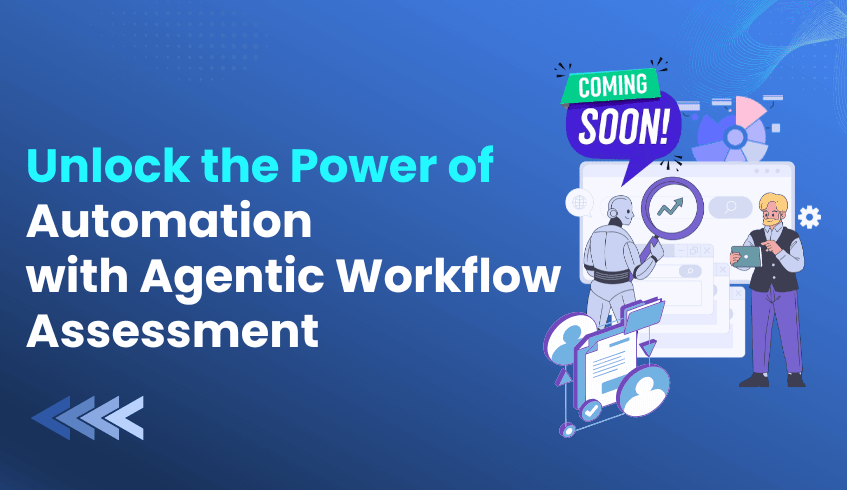
The future of enterprise efficiency is not only about having the right devices. It is about understanding how real work happens across your organization and spotting the moments where automation can create meaningful impact. Many teams want to adopt agentic workflows but struggle to identify where to begin. Most organizations lack visibility into the hidden routines, repetitive actions, and high-effort processes that consume employee time daily.
This is the core purpose behind introducing Agentic Readiness. We want to give IT leaders a clear way to see how work flows across applications and highlight the exact places where agentic automation can make a difference. Instead of guessing which tasks could benefit from automation, your dashboard will start revealing those opportunities for you. This update brings clarity, direction, and a practical starting point for any organization exploring Agentic-driven automation. With that foundation in place, we are excited to introduce a powerful new feature coming soon to your dashboard: the Agentic Workflow Assessment.
A Clear View of Real Workflows The Agentic Workflow Assessment brings visibility to the workflows happening across your enterprise devices. It provides the context you need before building any automation and gives you a starting point for identifying high-value opportunities. Once you see these workflows, you will have a clearer idea of which ones could be automated later using tools such as Google ADK, and n8n platforms.
What Insights Will You Gain? The upcoming dashboard upgrade provides a granular view of how work gets done in your organization. Here is what you can expect:
Visualize Real Workflows: Identify the most frequently used workflows and understand where employees are investing their time.
Map Application Dependencies: View all applications involved in each workflow and the sequence in which they are used.
Spot Critical Time Sinks: Workflows that exceed a total of 12 hours are marked as critical, making it easier to locate high-impact automation opportunities.
Defining Agentic Readiness The tool shows whether a workflow can be transformed into an agentic workflow using Innovative solutions available today, which are Google ADK and n8n. Workflows that meet this criteria are classified as Agentic Ready, helping teams understand where automation could drive measurable value.
Actionable Reporting All insights can be exported directly from the dashboard. These reports provide a full overview of your organization’s agentic readiness status, helping you plan and progress your automation journey with confidence. Stay tuned for this update to the ChromeOS Readiness Tool and get ready to uncover the hidden automation potential inside your enterprise.
Within the government IT landscape, efficiency, security, and cost-effectiveness are not merely aspirations, they are essential obligations. For the Douglas Omaha Technology Commission (DOTComm), supporting over 5,000 government workers across 120 locations was a logistical challenge that required a bold solution. By standardizing on Chrome Enterprise Browser, DOTComm didn't just simplify their infrastructure; they fundamentally transformed how Omaha and Douglas County serve their citizens.
DOTComm’s primary challenge was providing a reliable, secure way for employees to access files and stay connected, whether they were in the office or on the go. The solution lay in the browser. By deploying Chrome Enterprise Browser across their desktop and mobile fleets, DOTComm created a unified, secure workspace that travelled with the employee.
The impact on security was immediate. With Google Admin, the IT team could ensure that all downloads were automatically checked for malware, protecting sensitive government data without hindering user productivity. As Vijay Badal, Director of Application Services at DOTComm, noted, "As an IT department, we’re particularly pleased with the security and other IT benefits we get with Google... Chrome Browser and Google Workspace have allowed us to offer more secure and productive IT services."
The shift to a browser-first strategy produced staggering operational improvements. By centralizing management through the Chrome Enterprise Browser and Google Workspace, DOTComm achieved:
Reduced Support Volume: IT support tickets plummeted from 30 a day to just one or two, freeing up the helpdesk to focus on strategic initiatives rather than fires.
Leaner Operations: Infrastructure management headcount was reduced from six to one, allowing resources to be reallocated to development and innovation.
Cost Savings: The agency saved thousands of dollars in annual software licensing fees while simultaneously cutting hardware costs.
Faster Onboarding: New employees could be up and running faster and more cost-effectively than ever before.
DOTComm’s success with Chrome Enterprise Browser highlights the power of a cloud-first ecosystem. If you are inspired by these results and are considering taking the next step by migrating your devices to a full cloud-native operating system like ChromeOS or ChromeOS Flex, the ChromeOS Readiness Tool is your essential starting point.
The ChromeOS Readiness Tool is a free, private utility that helps organizations assess their technical readiness for a transition. It benefits your IT team by:
Identifying Compatible Devices: Instantly see which Windows devices in your fleet are eligible to be converted to ChromeOS or ChromeOS Flex.
Analyzing App Usage: Automatically inventory your applications to identify which are cloud-ready and which might require virtualization (VDI).
Generating Actionable Reports: Receive a detailed readiness report that allows you to plan a seamless, data-driven migration strategy without the guesswork.
Just as DOTComm standardized its browser experience to save costs and boost security, the ChromeOS Readiness Tool helps you determine how easily you can standardize your operating system to lock in those benefits for the long term. You can read the full story from here: https://chromeenterprise.google/customers/dotcomm-omaha-douglas-county/
Artificial intelligence is no longer experimental in the workplace. From writing assistance and design tools to copilots and generative platforms, AI applications are already shaping how employees work every day. In many organizations, this adoption has happened organically, often without centralized visibility or clear governance.
As enterprises plan their move to ChromeOS, understanding this AI usage landscape becomes just as important as evaluating devices and traditional applications. Without clarity into how AI tools are being used today, migration planning becomes more complex, and risk increases.
AI adoption is moving faster than most governance models. IT and security teams are frequently left asking fundamental questions. Which AI tools are installed across the organization? Where are they being used? Do they align with ChromeOS compatibility, security standards, and enterprise policies?
When these questions go unanswered, ChromeOS readiness assessments can stall. Migration decisions may rely on assumptions instead of data, security teams may lack visibility into unsanctioned AI usage, and organizations may miss opportunities to guide users toward approved, enterprise-grade AI platforms.
AI application visibility and readiness is no longer a future consideration. It is a present-day requirement for organizations that want to modernize their endpoint strategy responsibly.
Traditional readiness assessments focus on devices, operating systems, and conventional applications. While these remain critical, they do not capture the full picture of modern work.
AI tools often span cloud services, desktop applications, and browser-based workflows. They may be installed intentionally, introduced by individual teams, or adopted informally without IT involvement. This creates blind spots during migration planning and makes it difficult to balance innovation with control.
Without a structured way to assess AI usage, organizations risk carrying unmanaged complexity into their environments.
To address this growing challenge, the ChromeOS Readiness Tool is introducing an upcoming AI Application visibility capability.
This new feature is designed to bring AI usage into the same trusted assessment framework that organizations already rely on for ChromeOS migration planning. Instead of treating AI as an afterthought, it becomes a visible, measurable part of readiness discussions.
At a high level, AI Application visibility will help organizations:
Understand which AI tools are present across their environment
AI tool usage based on hours
See which AI applications are Gemini Ready
Support informed decisions around AI governance and standardization
Prepare for a future where Gemini plays a central role in enterprise AI workflows
AI is becoming a foundational layer of modern work, not a standalone capability. As this shift accelerates, readiness assessments must evolve alongside it.
The upcoming AI Application visibility feature in the ChromeOS Readiness Tool reflects this evolution. It provides a structured way to acknowledge existing AI behavior, address current gaps, and prepare for a more secure, intentional AI strategy on ChromeOS.
More details will be shared soon. This is the first step toward bringing clarity and confidence to AI-driven ChromeOS transformations.
For nearly a century, Blue Cross Blue Shield of North Carolina (BCBSNC) has been known for its commitment to quality, affordability, and community-focused healthcare. In today’s healthcare landscape, operational excellence depends not only on medical systems but also on the technology that supports secure access, fast workflows, and dependable digital experiences.
Like many enterprise organizations, BCBSNC faced a familiar challenge. Their teams were still relying on legacy browsers that slowed productivity and increased risk. The organization needed a modern browsing foundation that could support cloud applications, protect sensitive healthcare data, and deliver a consistent experience for thousands of employees.
This case study highlights how BCBSNC transformed its environment by selecting Chrome Enterprise Browser and how your organization can evaluate its own path toward a secure, cloud-first future.
BCBSNC identified that a large percentage of its workforce was still depending on Internet Explorer and Microsoft Edge in their older configurations. This created several operational pain points:
Update fatigue: IT teams were spending time and resources trying to keep legacy browsers updated, which created gaps in security posture.
Productivity slowdowns: Key applications responded inconsistently, and employees experienced delays that hurt daily workflows.
Heightened security risks: Older browsers lacked modern phishing protections, sandboxing, and real-time safeguards needed for sensitive healthcare information.
BCBSNC needed a browser that could support modern web standards while still giving employees access to critical legacy applications without disruption.
Instead of defaulting to the most well-known browser, BCBSNC conducted a structured evaluation. They compared six major browsers using eight decision categories, such as operating system compatibility, enterprise-grade security, accessibility capabilities, and strength of the extensions library.
Chrome Browser stood out due to both performance and ecosystem value. With Chrome Enterprise, BCBSNC gained powerful administrative controls through the Google Admin Console, letting the End User Computing team manage updates, enforce policies, and maintain consistent governance across their environment.
BCBSNC adopted a disciplined deployment model using Chrome release channels. This helped them achieve stability while still testing future updates early.
Beta Channel: Assigned to pilot users who verified application behavior on upcoming Chrome versions. This allowed the IT team to validate compatibility six weeks before public release and reduce surprises.
Stable Channel: Rolled out to the broader workforce. This channel delivered fully tested releases every 2 to 3 weeks and kept the environment predictable.
According to Nitin Kadam, Senior Enterprise Architect at BCBSNC, Chrome Enterprise strengthened its defenses through helpful warnings, phishing prevention, and advanced site protection features.
One of the most common concerns for any browser transformation is the fear that older applications might stop working. BCBSNC addressed this using Legacy Browser Support.
The outcome was remarkably positive. Out of roughly 1200 applications in their environment, only six required Legacy Browser Support. All six continued to function reliably, which gave BCBSNC confidence to modernize without interrupting mission-critical operations.
BCBSNC demonstrated that choosing Chrome Enterprise Browser can elevate security, accelerate development workflows, and raise productivity across large teams. Once your organization standardizes on a secure enterprise browser, the natural next step is to evaluate the devices that support your cloud first goals.
This is where the ChromeOS Readiness Tool becomes essential.
Organizations considering ChromeOS Flex often want clear insights on which devices in their current Windows fleet are compatible. The ChromeOS Readiness Tool provides those insights without guesswork.
Clear, data-driven assessments: The tool scans your existing devices and shows which ones qualify as Certified models that can transition smoothly to ChromeOS Flex.
Cost efficiency: Instead of replacing an entire fleet, you can extend the lifespan of devices that already meet requirements, reducing capital expenses.
Sustainability benefits: Repurposing hardware helps minimize e-waste and supports long-term environmental commitments.
By following the same principle that guided BCBSNC, you can use data to shape the next phase of your cloud-first journey. Chrome Enterprise Browser delivers a modern, secure browsing foundation, and the ChromeOS Readiness Tool helps you evaluate the hardware that will support your workforce in the future.
You can read the full case story here:
In emergency medical services, every second is a decision point. Paramedics have traditionally worked with paper charts and radio updates, but modern care requires a connected, responsive and secure digital environment. Access to patient history, charting systems and reference materials at the point of care is now essential for fast and effective treatment.
Middlesex Hospital has moved from a basic paper world to a fully digital model. With Chrome Enterprise Browser, the hospital has solved a central challenge in healthcare: delivering instant access to vital information while protecting sensitive patient data at all times.
This is how Middlesex Hospital is using Chrome Enterprise Browser to support mobility, strengthen security and improve the experience of frontline medical teams. You can also watch their story from here: https://www.youtube.com/watch?v=A9jKroGk8m0
Middlesex operates with a distinct EMS structure that relies heavily on “intercept paramedics.” These are specialist medics who do not use dedicated vehicles. Instead, they jump between different ambulances depending on the call.
“It is really important for us to be portable and be able to take our technology with us,” one Middlesex EMS representative explains.
This high degree of mobility presents a technical requirement that goes far beyond basic device access. Paramedics need a consistent workspace no matter where they are, what equipment they use or which hospital they are supporting. Chrome Enterprise Browser becomes the anchor that follows them everywhere. Whether charting patients after transferring them to one of seventeen hospitals or documenting care from a hotspot in the field, the browser provides a unified entry point to all cloud-based systems.
Portability alone is not enough. In healthcare, security must move at the same speed as the clinical response.
“Keeping patient data safe is one of our primary concerns,” Middlesex emphasizes.
Chrome Enterprise Browser plays a critical role in maintaining that protection. Devices in EMS environments frequently come online and offline throughout the day. Middlesex IT teams rely on the browser to apply security policies instantly whenever a device connects. The physical device becomes secondary. The browser acts as a secure, managed container that brings the correct controls directly to the user.
This approach supports the rapid sharing of information between healthcare organizations while keeping sensitive records shielded from unauthorized access. Both speed and privacy remain intact.
One of the often-overlooked benefits of Chrome Enterprise Browser is how natural it feels for frontline teams. Paramedics already use the browser in their everyday lives. This familiarity removes the learning curve that often slows down technology deployments.
For Middlesex, this means fewer support tickets, faster adoption and more time focused on patients. When technology disappears into the background, care becomes the priority.
Middlesex Hospital’s story highlights what is possible when mobility, security and simplicity come together in a modern browser environment. For many IT leaders, the next question is practical. How do you prepare your own fleet, applications and workflows for a similar shift?
This is where the ChromeOS Readiness Tool becomes a core part of the planning process.
Before introducing ChromeOS or rolling out Chrome Enterprise Browser across teams, the ChromeOS Readiness Tool analyzes your environment. It provides a private and comprehensive way to understand which applications already work smoothly on ChromeOS devices, and which may need attention.
How it benefits your deployment:
Inventory & Assessment: Just as Middlesex needs to know their "charting systems" are accessible, this tool automatically identifies the apps your workforce visits most and assesses their compatibility.
Risk Mitigation: It flags potential blockers before they reach the paramedics' hands. You get a detailed report showing which devices and apps are "cloud-ready" versus those that may require virtualization.
Security & Extension Auditing: Instead of guessing which browser extensions your team needs, the tool provides a "Browser Insights" report. This allows you to identify critical extensions and flag risky, unauthorized ones ensuring you can build precise security policies from day one.
By using the ChromeOS Readiness Tool, IT teams can build a confident transition plan that supports their users from day one. Middlesex Hospital shows what is possible when the right technology meets the right workflow. With the right preparation, your teams can open their browser knowing it is ready to perform whenever the moment demands it.
In today’s evolving threat landscape, the browser is no longer just a gateway to the internet. It has become the primary workspace for employees and one of the most critical surfaces to protect. For modern, cloud-focused organisations like Snap Inc., security begins with strengthening the browser itself.
Snap’s approach shows how a secure enterprise browser strategy can reduce risk, support global scale, and simplify device management. By adopting Chrome Enterprise as their secure enterprise browser, they created a model that blends strong security with an efficient user experience.
The question many enterprises face now is simple: how do we move toward that level of browser-centric security with the devices we already have?
The ChromeOS Readiness Tool provides that path. Before any organisation can adopt a secure, cloud-first model, it must understand the capabilities of its current hardware fleet. The ChromeOS Readiness Tool helps bridge that gap and prepares enterprises for a future where the browser leads their security strategy.
Snap has been managing Chrome Enterprise across a large global workforce for more than four years. Their implementation highlights why the Chrome Enterprise Browser has become a foundational layer in modern IT security.
Defense in depth: Nick Reva, Head of Enterprise Security Engineering at Snap, shared that by hardening Google Chrome as their secure enterprise browser, they reduced browser attack surface and introduced layered controls that protect employees from account takeover threats.
Extension control: Using Chrome Enterprise Core, the team evaluated and blocked high-risk extensions while creating a trusted list. As Vaidehi Thakur, Enterprise Security Engineer at Snap, explained, this prevented the types of supply chain attacks that often target browser extensions.
Built in DLP controls: Instead of depending solely on heavy CASB or SASE tooling, Snap used Chrome Enterprise Premium to limit risky transfers of code and sensitive information. These protections worked immediately with minimal overhead for security teams.
Through this strategy, Snap delivered strong security protections without slowing down productivity. They supported zero trust access for more than four hundred internal applications and reduced risky data movement, all within the browser.
While Snap’s cloud native foundation makes adoption straightforward, many organisations operate mixed fleets of older Windows and Mac devices. Leaders often want to move toward a secure, cloud-first environment such as ChromeOS or ChromeOS Flex, but lack clarity about which devices can support this transition.
Visibility is the missing piece, and without it, IT teams cannot prepare their environment for a browser-first security strategy.
Moving toward a secure, cloud-focused operating model begins with high-quality fleet insights. The ChromeOS Readiness Tool delivers those insights and identifies which devices can run ChromeOS Flex, giving you a clear path toward modernising your endpoints.
Here is how the tool supports your strategy.
The ChromeOS Readiness Tool scans your Windows devices and identifies the models that are certified for ChromeOS Flex. This removes guesswork and gives you a clear view of how much of your fleet can transition immediately without new hardware purchases.
Snap strengthened their security posture by focusing on the browser. The ChromeOS Readiness Tool helps you apply the same philosophy by converting eligible devices to ChromeOS Flex. This brings proactive protections such as sandboxing, background updates, and verified boot to your existing fleet while reducing the cost of device refresh cycles.
By identifying devices that can be renewed with a lightweight, cloud-first operating system, the tool supports sustainability efforts and helps organisations reduce e-waste. It also extends the usable life of hardware already in service.
Snap used Chrome Enterprise Premium to support zero-trust access across its environment. The ChromeOS Readiness Tool is the first step toward this model. It identifies devices that can move into a managed ChromeOS experience, where identity-centric policies and advanced access controls can be applied consistently.
The tool provides a clear report that supports phased rollouts. IT teams can identify a pilot group of ready devices, test Chrome Enterprise policies such as data protection rules and extension controls, and build toward a full organisation-wide deployment.
Snap showed that the future of enterprise security lives in the browser. The ChromeOS Readiness Tool helps you take the first step toward that future by revealing what your current devices can already support. With the right insights and a clear path forward, you can modernise your fleet and move confidently toward a secure, cloud-first environment powered by the Chrome Enterprise Browser.
(You can read Snap’s full case story here: https://chromeenterprise.google/resources/customer-stories/snap/)
In today’s cloud-first, hybrid workplace, the browser has become the primary endpoint for accessing corporate apps, data, and workflows. This shift has redefined the browser as a critical security boundary one that attackers increasingly target through compromised sessions, unsafe websites, and risky extensions.
Chrome Enterprise Browser applies a layered, Zero Trust–aligned model that protects users and data across three essential control points: the session, the domain, and the extension.
Session security verifies that the person using a web app is legitimate and that their actions remain safe throughout the session. This protects access across any location, network, or device.
Context-Aware Access Controls (CAAC) allow IT teams to set dynamic access rules based on real-time signals, including:
User identity: Is the user signed in with a managed profile?
Device posture: Does the device meet security baselines such as OS version, disk encryption, or third-party security posture?
Location: Is the user connecting from an approved region or IP range?
These contextual signals determine whether the user receives access, limited access, or no access at all.
Data Loss Prevention (DLP) enforces protection inside the session by controlling sensitive data movement. Policies can:
Block or warn on copy/paste from enterprise apps to unmanaged destinations
Prevent high-risk uploads or downloads based on domain or file type
Apply watermarks to sensitive content and block screen captures
Together, these capabilities strengthen authentication, limit risky actions, and reduce the chance of sensitive data leaking during active sessions.
Domain security protects users from malicious or unauthorized websites and isolates corporate activity from threats. It is the first defensive layer against phishing, malware, and cross-site attacks.
Chrome’s real-time threat protection, powered by Google’s security intelligence, helps:
Block phishing pages and malware downloads
Analyze unfamiliar or high-risk file downloads before they reach the device
Core browser defences, such as site isolation and sandboxing, place each site in its own separate process. If one tab encounters malicious code, it cannot access data in other tabs or on the device.
Administrators can also apply URL filtering, allowing access only to categories and domains relevant to work while restricting sites that introduce risk or lower productivity.
Extensions can boost productivity but also introduce risk through broad permissions or hidden malicious behaviour. Chrome Enterprise Browser provides centralized controls that help teams deploy only what’s trusted.
IT administrators can use policy-based management to:
Force-install approved extensions
Allow-list or block-list extensions from the Chrome Web Store
Restrict extensions based on the permissions they request, such as access to the camera, microphone, or reading data across websites
Advanced visibility features provide ongoing extension risk monitoring, highlighting permission levels, behaviour patterns, and potential anomalies. This gives IT teams a clear path to detect unwanted extensions and act before they create exposure.
Effective browser security begins with understanding the current environment. The ChromeOS Readiness Tool supports this by giving organizations a detailed assessment of their existing setup and readiness for ChromeOS.
This assessment strengthens all three security pillars:
Extension Security Insight: The tool’s Browser Insights capability shows which extensions are installed across managed devices. It highlights the browser versions and Extensions along with IDs, helping IT teams clean up the environment and create stronger allow-list/block-list policies.
Secure Transition: All readiness information is strongly encrypted, whether stored locally or in cloud storage. This provides a secure foundation for a smooth transition to ChromeOS and a controlled rollout of Chrome Enterprise Browser’s security capabilities.
Chrome Enterprise Browser brings together Session, Domain, and Extension security to create a resilient, adaptive protection model that matches how work happens today. By combining real-time threat protection, contextual access controls, and granular extension governance, organizations gain a stronger, more consistent security perimeter directly at the point where users access apps and data.
In today’s enterprise, the browser has become the primary gateway to work and risk. As business operations move to the cloud, securing web access is no longer just about blocking obvious threats. It’s about creating a controlled browsing environment where employees remain productive without exposing the organization to harm.
A critical component of this strategy is the careful management of whitelisted domains. While blocking lists prevent broad threats, a thoughtfully curated whitelist ensures essential business sites remain accessible, secure, and free from the disruptions caused by overzealous blocking.
Unsafe websites pose significant threats, including phishing sites designed to steal credentials, malware distribution sites that infect endpoints, and command-and-control domains used by attackers to maintain access to compromised systems.
Modern CEP solutions, often integrated with threat intelligence, block these domains proactively, stopping threats at the browser level before they reach endpoints.
While blacklists are essential, they can inadvertently block legitimate sites critical for business operations, causing lost productivity and administrative burden.
A whitelist list of trusted domains explicitly allowed in CEP offers a precise security approach. It ensures business continuity by keeping critical SaaS apps and internal portals accessible, maintains a smooth user experience with fewer frustrating block pages, and allows policy precision, balancing access with protection.
Effective whitelisting requires a strategy beyond listing the main corporate sites.
Start with a comprehensive audit of all web properties employees need to access. Identify which SaaS applications are business-critical, such as CRM and HR platforms, as well as vendor or support sites required for software updates and licensing. Internal resources, like private intranet portals, also need inclusion to ensure uninterrupted access.
Pro Tip: Review workflows of your most productive teams to ensure no critical third-party integrations, like payment gateways or content delivery networks, are missed.
Not all users or domains require identical access. Implement user- or group-specific policies, granting domain access only to those who need it, for example, marketing platforms only for the Marketing team. Limit access to necessary subdomains instead of full root domains whenever possible, reducing exposure.
Wildcards (e.g., *.trusted-site.com) can simplify management for large platforms but may introduce risk. Only apply them to domains fully controlled by your organization, and avoid generic wildcards that could inadvertently expose users to compromised content on third-party services.
Whitelists should evolve as tools are adopted or retired. Establish a clear request process for employees to propose new domains, complete with business justification and IT review. Conduct regular audits to remove obsolete or unused domains, minimizing the attack surface.
Data-Informed Whitelisting with ChromeOS Readiness Tool
Building an effective whitelist requires validated usage data, and the ChromeOS Readiness Tool supports this process for organizations transitioning to ChromeOS and the Chrome Enterprise Browser.
Identify Critical Browser Applications: The tool collects usage logs showing which browser-based applications are actively used, providing a data-backed list of critical domains for whitelisting.
Assess Browser Security Posture: It captures all active browser extensions across your fleet. IT teams can identify unauthorized or high-risk extensions and enforce secure policies alongside domain whitelisting.
By turning insights into action, the ChromeOS Readiness Tool transforms whitelisting from guesswork into a proactive, data-informed security policy, maintaining business continuity, strengthening browser security, and supporting a seamless move to the Chrome Enterprise environment.
Browser extensions can be a double-edged sword. They enhance productivity by adding custom features and streamlining workflows, but they also expand the browser attack surface, making enterprise data vulnerable.
Risk doesn’t only come from overtly malicious extensions. “Over-powered” extensions, those requesting far more permissions than needed, pose an equally serious threat.
Suspicious Extensions: Designed to steal data, hijack sessions, or log keystrokes. Some slip through store vetting or are installed via sideloading, bypassing official controls.
Over-Powered Extensions: Even a simple tool might request access to all your data on all websites. If compromised, it can gain full access to corporate applications and networks.
Shadow IT: Unapproved employee-installed extensions create a hidden, unmanaged inventory where the majority of risk lives.
Chrome Enterprise enables a proactive, zero-trust approach to extension management through allowlists and permission-based policies.
The most effective control is to block all extensions by default and only permit vetted, business-critical tools:
Block all (*): Use the ExtensionInstallBlocklist policy.
Allowlist approved extensions: Use ExtensionInstallAllowlist or ExtensionInstallForcelist to specify exactly which tools are allowed.
This approach shifts control to IT, reducing exposure to unknown or risky extensions.
Granular permission controls prevent overpowered extensions from gaining dangerous access:
Cookies or identity access: Prevents session hijacking and credential theft.
System-level APIs or USB access: Reduces risk from extensions with excessive privileges.
Search or homepage modifications: Stops malicious redirection.
This smart filtering mitigates risks even from benign-looking extensions.
For advanced protection, Chrome Enterprise Premium provides:
Extension auditing and reporting: Real-time visibility into every installed extension, its permissions, and user installs.
Risk-based enforcement: Categorizes extensions as High, Medium, or Low risk, allowing automatic warnings or blocks.
Request workflows: Users submit extensions for IT review instead of self-installing, curbing Shadow IT.
Before applying policies, IT must understand the current environment. The ChromeOS Readiness Tool (CRT) supports this with Browser Insights:
Uncover Shadow IT: Generates a complete inventory of installed extensions across all devices.
Inform the Allowlist: Usage data highlights which extensions are essential for business workflows.
Identify High-Risk Extensions: Spot low-use or overpowered extensions for blocking or permission restriction.
By combining CRT insights with Chrome Enterprise controls, IT teams move from guesswork to data-driven extension management, creating an allowlist that is both secure and functional.
Browser extensions are a prime pathway for malware and data loss. By implementing an Allowlist, restricting high-risk permissions, and leveraging the ChromeOS Readiness Tool for discovery, IT teams can significantly reduce the browser attack surface.
The browser is the new enterprise endpoint. Controlling extensions is no longer optional is foundational security.